Legislative Politics and Policy Making (Series)

Legislative Politics & Policy Making covers both Congress and state legislatures and welcomes both quantitative and qualitative work. It encompasses work on interactions among Congress and other political entities. We are actively seeking political science and legislative politics writers for this series, and would be much obliged to hear about the ideas, projects, and goals of those involved. We look for manuscripts that make an important theoretical contribution, are methodologically rigorous, and address topics of important substantive interest, as well as "insider" books that explore the operation of Congress, edited volumes that provide accessible versions of recent research on Congress and analysis of congressional politics, or cross-over books that address topics such as gender, race, the media, and interest groups and Congress.

Jamie Carson is broadly interested in the study of legislative politics and specifically the U.S. Congress. He is best known for his work on congressional elections, parties and polarization, and legislative behavior, but he has also published work on congressional redistricting, legislative organization and procedure, legislative voting, and separation of powers. His research involves the analysis of roll calls, legislative votes, congressional election returns, and amending activity in Congress.

James M. Curry studies centers on U.S. politics and policymaking, with a focus the U.S. Congress. He is the author of two books, Legislating in the Dark (2015) and The Limits of Party (2020, with Frances E. Lee), as well as various other studies of legislative politics, and his work and his writings have appeared in the New York Times, the Washington Post, The Atlantic, Vox, and elsewhere. Curry received his Ph.D. in Government & Politics from the University of Maryland in 2011 and previously worked on Capitol Hill in the offices of Representative Daniel Lipinski and the House Appropriations Committee.

Series Editors
Jamie L. Carson, University of Georgia
carson@uga.edu

James M. Curry, University of Utah
james.curry@utah.edu

Acquiring Editor
Madison Allums
mallums@umich.edu
734-647-0831
Showing 1 to 25 of 36 results.

The Less Responsive Chamber?

Politics and Development in the Early US Senate

A valuable examination of how the U.S. Senate’s responsiveness has evolved

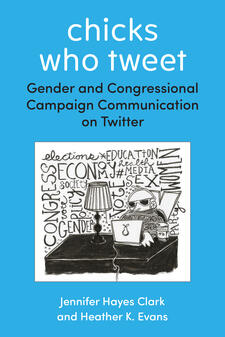
Chicks Who Tweet

Gender and Congressional Campaign Communication on Twitter

Opportunities and constraints for women candidates communicating over social media

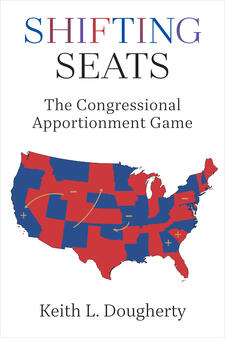
Shifting Seats

The Congressional Apportionment Game

The bold strategies legislators have used to increase their state’s power

Posting for Power

Congressional Partisanship on Social Media

Why do legislators frame issues as Democrat vs. Republican?

Broken Record

The Origins and Evolution of Recorded Voting in the U.S. Congress

Yay or Nay? Exploring how roll call voting has contributed to political polarization

Waves of Discontent

Electoral Volatility, Public Policymaking, and the Health of American Democracy

Understanding the link between voter frustration and changing party control

Strategic Responsiveness

How Congress Confronts Presidential Power

Revealing the role of policy in the struggle for power between Congress and the president

Home Field Advantage

Roots, Reelection, and Representation in the Modern Congress

Investigates the effects of legislators’ local roots on congressional campaigns, elections, and representation

The Committee

A Study of Policy, Power, Politics and Obama’s Historic Legislative Agenda on Capitol Hill

2nd Edition, With a New Preface

A deftly crafted insider account of how congressional committees really work, updated for 2021

Minority Party Misery

Political Powerlessness and Electoral Disengagement

When lawmakers take their ball and go home

The Politics of Herding Cats

When Congressional Leaders Fail

Congressional leaders compete with the media for control over public policy

Losing to Win

Why Congressional Majorities Play Politics Instead of Make Laws

The political liveliness of DOA legislation

It's Not Personal

Politics and Policy in Lower Court Confirmation Hearings

Lower Court confirmation hearings reveal much about senators’ power and ambitions

On Parliamentary War

Partisan Conflict and Procedural Change in the U.S. Senate

With a new Preface

Utilizes game theory to better understand the relationship between procedural change and partisan conflict in a dysfunctional U.S. Senate

The Jeffords Switch

Changing Majority Status and Causal Processes in the U.S. Senate

A creative and nuanced approach that takes advantage of an organic shift in Senate power to uncover how Senate power actually works.

The Whips

Building Party Coalitions in Congress

Whither the whips, thither the vote

The Committee

A Study of Policy, Power, Politics and Obama's Historic Legislative Agenda on Capitol Hill

A deftly crafted insider account of how congressional committees really work

The Committee

A Study of Policy, Power, Politics and Obama’s Historic Legislative Agenda on Capitol Hill

A deftly crafted insider account of how congressional committees really work

Electoral Incentives in Congress

Legislators in the 19th century behaved much as we expect legislators to behave today.

Gendered Vulnerability

How Women Work Harder to Stay in Office

Analysis-driven study of female candidates and how they represent their constituents better than their male colleagues

Politics Over Process

Partisan Conflict and Post-Passage Processes in the U.S. Congress

Analyzes the impacts of partisanship, polarization, and institutional reforms on how the U.S. Congress resolves inter-cameral differences


On Parliamentary War

Partisan Conflict and Procedural Change in the U.S. Senate

1st Edition

Utilizes game theory to better understand the relationship between procedural change and partisan conflict in a dysfunctional U.S. Senate


The Rise of the Representative

Lawmakers and Constituents in Colonial America

Uncovers the roots of the American political system: the development of colonial representative assemblies