
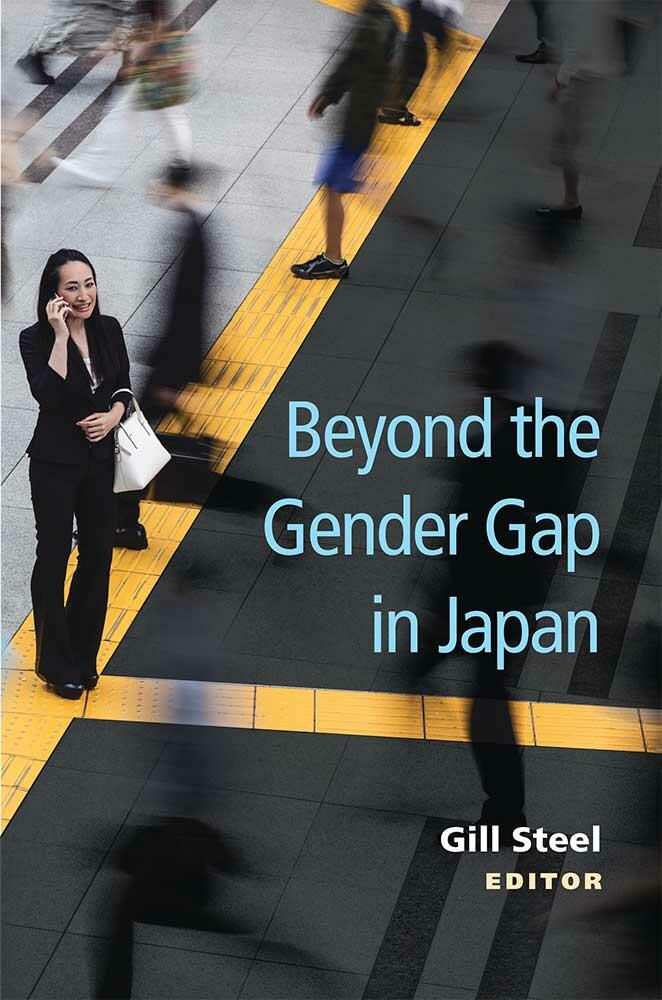
Beyond the Gender Gap in Japan
Gives critical attention to the issue of Japan’s low level of gender equality and the conflicting information from surveys of women reporting a high sense of well-being
Description
Why do Japanese women enjoy a high sense of well-being in a context of high inequality? Beyond the Gender Gap in Japan brings together researchers from across the social sciences to investigate this question. The authors analyze women’s values and the lived experiences at home, in the family, at work, in their leisure time, as volunteers, and in politics and policy-making. Their research shows that the state and firms have blurred “the public” and “the private” in postwar Japan, constraining individuals’ lives, and reveals the uneven pace of change in women’s representation in politics. Yet, despite these constraints, the increasing diversification in how people live and how they manage their lives demonstrates that some people are crafting a variety of individual solutions to structural problems. Covering a significant breadth of material, the book presents comprehensive findings that use a variety of research methods—public opinion surveys, in-depth interviews, a life history, and participant observation—and, in doing so, look beyond Japan’s perennially low rankings in gender equality indices to demonstrate the diversity underneath, questioning some of the stereotypical assumptions about women in Japan.
Gill Steel is Professor at the Institute for the Liberal Arts, Doshisha University.
Reviews
"This book offers an excellent collection of essays that show the complex and diverse life choices that Japanese women make within their gender-based constraints. Steel argues that changes in corporate customs and structure, the introduction of the national gender quota, and electoral system reforms are necessary for women’s advancement into national politics and higher positions in the corporate world."
- Akiko Yasuike
—Akiko Yasuike, Pacific Affairs
"As a reader, I found the analysis of formal political participation—elected and appointed—to be particularly insightful. The Japanese political system can be difficult to grasp, but these articles were clearly written and accessible. On the whole, this was a fascinating volume to explore."
- Winifred Lewis Shiraishi
—Winifred Lewis Shiraishi, The GALE Journal
"This collection of 14 essays, edited by Steel (Doshisha Univ., Japan), expands the understanding of contemporary gender expectations in Japan, particularly those impacting women. Relying on direct interviews with Japanese women, the contributing authors add complexity and depth to a wide range of issues." —CHOICE
- L.A. Makela
"I give potential readers a very high recommendation as the volume is accessible and clarifying, and it will be useful to researchers and students alike, both in college and graduate classrooms. As such, the volume makes a significant contribution to the field of Japan studies and women’s and gender studies."
- Anne Aronsson
—Anne Aronsson, Journal of Japanese Studies
News, Reviews, Interviews
Read: Reviewed in the Journal of Japanese Studies | March 2021