
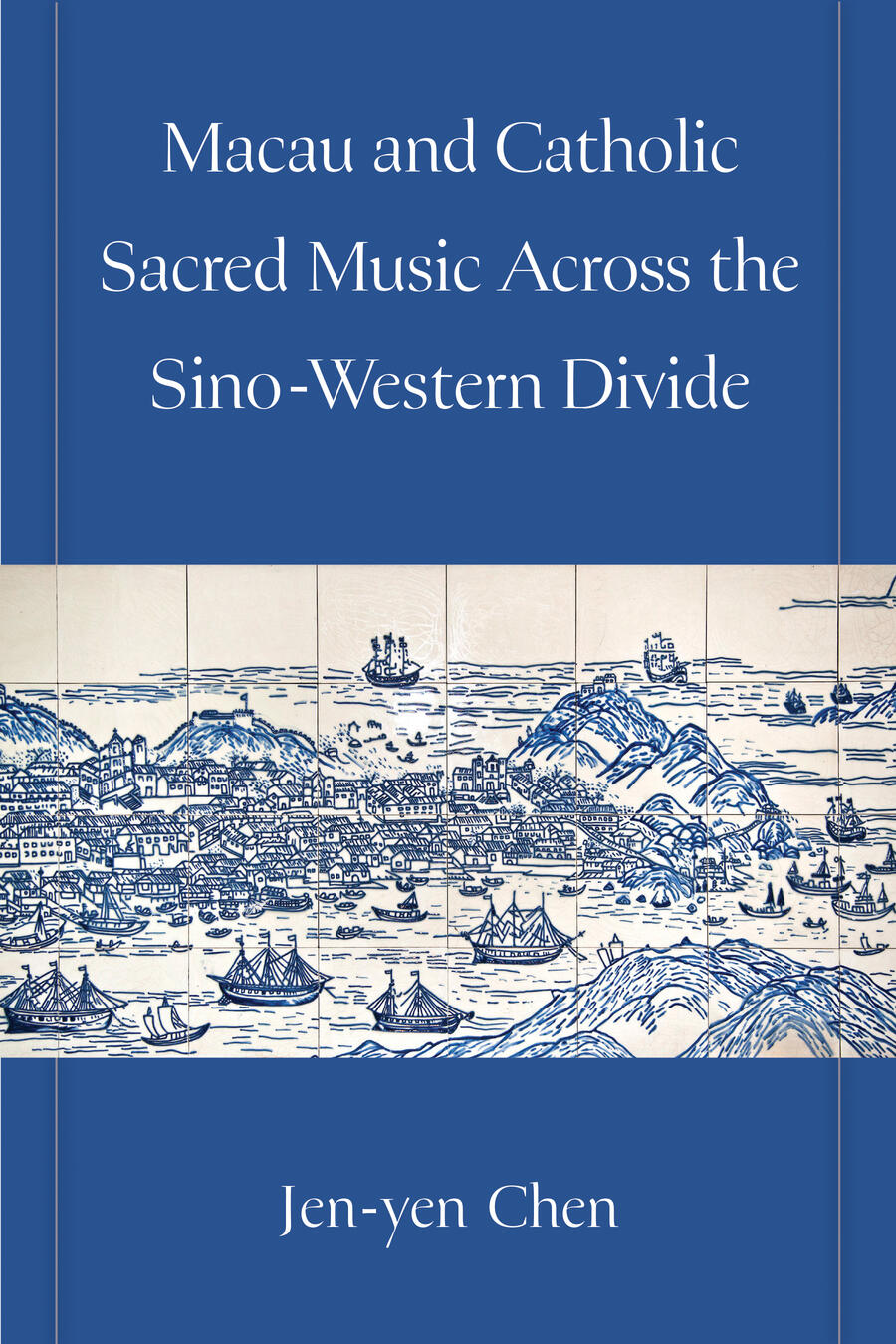
Macau and Catholic Sacred Music Across the Sino-Western Divide
The sonic experiences and cultural diversity of the Catholic religion in Macau
Description
For three centuries, the former Portuguese colony of Macau served as the gateway into mainland China and the locale for the development of an Asian Catholic culture that encompassed distinctive musical practices and styles. Macau and Catholic Music Across the Sino-Western Divide draws extensively upon historical documents in Chinese and Portuguese for a polylingual approach to Catholic sacred music. Jen-yen Chen follows this music from the sixteenth century through the twentieth by reading literary accounts of sound, primary source documents, and musical notation to examine the impacts of linguistic, political, and cultural divides and the ways sounds have traveled across these divides. Chen covers Chinese responses to Western sounds in Macau and southern China, illuminating the strategies for the use of sounds and musicking adopted by Jesuit missionaries; and the complexities of identity formation negotiated by Macau Catholics who confront exceptionalist historical discourses of Chinese or Portuguese “greatness.”
Drawing from sound studies and musicological methods, Chen argues that Chinese descriptions of Catholic sounds in Macau, including the ringing of church bells, the playing of the organ, and choral singing, illuminate spatial, sonic, and ideological mobilities that reconfigure Chinese and European identities. Macau and Catholic Music Across the Sino-Western Divide also extends to contemporary times to explore how present day members of Macau’s Catholic community position themselves in relation to the historical narratives often told about their city, cultivating a rich individuality of identity that refuses conformity to fixed notions of Asianness or Westernness.
Jen-yen Chen is Professor of Musicology at National Taiwan University.
Reviews
“Macau and Catholic Sacred Music Across the Sino-Western Divide is an excellent book on the colonial and contemporary resonance of Catholic music in Macau. Chen makes an outstanding contribution to historical (ethno)musicology, truly a pathbreaking text that allows voices from both sides of the colonial divide to be heard. This book is an absolutely masterful text.”
- Robert L. Kendrick, The University of Chicago
“Macau and Catholic Sacred Music Across the Sino-Western Divide sheds light on the important yet little studied musicological history of Catholicism in Macau. Chen’s display of excellent linguistic capability and diverse range of case studies are impressive. I applaud Chen’s ability to decenter Western perspectives as this ‘Polyglot Decentering’ is urgently needed in musicology.”
- Nancy Yunhwa Rao, Rutgers University
“A thoughtful, wide-ranging, often poignant meditation on how visitors to and residents of Macau have used the sounds of Catholic sacred music—the bell, the organ, the chant, the polyphonic chorale—to both assert the existence of, and to refuse, essentialized notions of a ‘Sino-Western divide.’”
- Cathryn Clayton, University of Hawai'i