
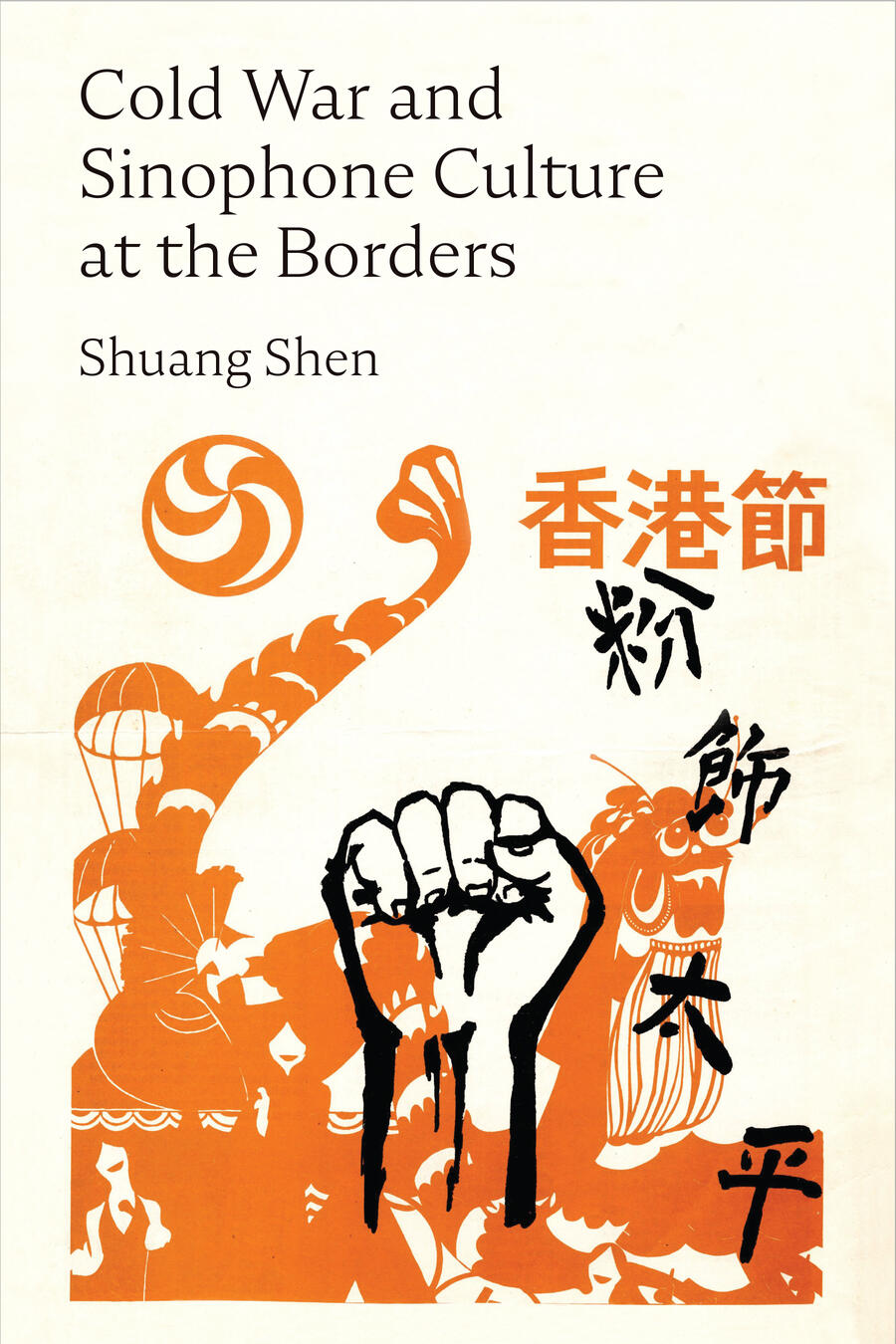
Cold War and Sinophone Culture at the Borders
The cultural production of Sinophone communities outside of China during the Cold War
Description
Cold War and Sinophone Culture at the Borders examines Sinophone literary and cultural production in relation to the politics of the global Cold War and decolonization in Hong Kong, Singapore, and Malaysia. As we reckon with the historical and contemporary geopolitical standoffs in the Cold War–divided territories, Shuang Shen draws attention to the diasporic communities outside Chinese sovereign territories and shows that these supposedly peripheral locations were in fact significant cultural and political hot spots.
Shen demonstrates how Cold War borders exerted geo-power over strategic hot spots, organized global flows of populations and cultures, hardened the boundaries of aesthetic debates, and managed interracial relationships and plurilingual exchange. The multifold bordering effect in turn complicates the common perception of the border as a mechanism of territorial division. Cold War and Sinophone Culture at the Borders proposes that a critical examination of borders—not just territorial divisions, but also social, political, and aesthetic boundaries––can tap into different structures of power without needing to incorporate them into a single binary framework of the metropole versus colony.
Shuang Shen is Associate Professor of Comparative Literature and Asian Studies at Pennsylvania State University.
Reviews
“This insightful and richly researched book offers a fresh reassessment of the causes and consequences of Cold War politics in Southeast Asia. Focusing on Hong Kong, Singapore, and Malaya as three key sites of ideological contestation, Shuang Shen traces the circulation of cultural capital—language, literary discourse, fiction, and cinema—against the backdrop of international antagonisms between the political right and left. With nuance and clarity, the book reveals how cultural production both shaped and was shaped by Cold War alignments in the region.”
- David Der-wei Wang, Harvard University
“By employing borders ‘as method’ or lens to view Sinophone writing in Cold War Southeast Asia, Shen ingeniously reveals how the complexity of intersecting borders—national, political, linguistic, racial and more—are lived and negotiated by the people at an angle from the dominant Cold War and nationalist ideologies.”
- Prasenjit Duara, Duke University
“Cold War and Sinophone Culture at the Borders challenges the assumption that cultural production, historical narratives, literary taxonomies, and critical methodologies remained unaffected by the global bipolar tensions of the Cold War. It resists defining the relationship between the Cold War and literary production as a simplistic cause-and-effect dynamic. Shen doesn’t shy away from thinking through the work via Sinophone studies while finding ways to address the blind spot of the burgeoning field.”
- E. K. Tan, Story Brook University
“This exciting study takes the concept of borders and weaponizes it—using a rethinking of territorial, historical, disciplinary, and cognitive borders to offer a provocative new perspective on the Cold War through the lens of Sinophone East and Southeast Asia.”
- Carlos Rojas, Duke University