
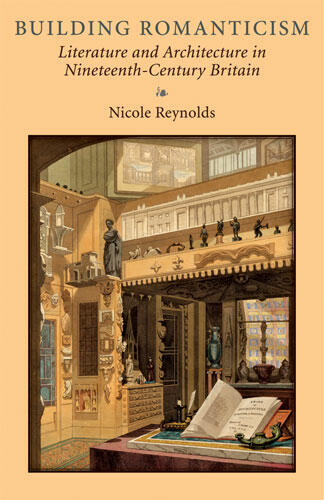
Building Romanticism
Literature and Architecture in Nineteenth-Century Britain
A study of the importance of architecture in Romanticism
Description
Building Romanticism sets the literary culture of Romantic Britain within the context of the period’s architectural productions in order to recover a relationship between these arts that, though deeply valued by writers and architects of the day, has been neglected by modern scholars in both fields. Toward this goal, Nicole Reynolds explores the centrality of architecture and architectural tropes to Romanticism’s dramatic reconceptualization of the individual subject and of the world that subject inhabits.
Focusing on the correspondence between the period’s built environments and its literary pursuits, Building Romanticism argues that at this turbulent moment in British history a number of politically charged and aesthetically resonant architectural spaces, both real and imagined, negotiated intense anxieties about shifting notions of gender and sexuality, increased class mobility, the individual’s uncertain place in history, challenges to the British national character and to the project of nation building, and the very form and function of art itself. By tracing the reception of Romantic topoi—rhetorical and literal common places—through the nineteenth century, this book explores how Victorians remodeled Romanticism, its ideological preoccupations and cultural artifacts, according to their own era's social agendas.
Nicole Reynolds is Associate Professor of English and Women's and Gender Studies, Ohio University.
Reviews
"Bold and intelligent ... Reynolds's readings of these weirdly contradictory spaces and texts is subtle and attentive."
- Simon Bradley
—Times Literary Supplement
"[Reynolds'] study persuasively suggests that studying the literary nature of architecture and the spatial nature of literature helps highlight contested notions of a gendered and nationalized subject."
- Rachel Ramsey
—Eighteenth Century Fiction