
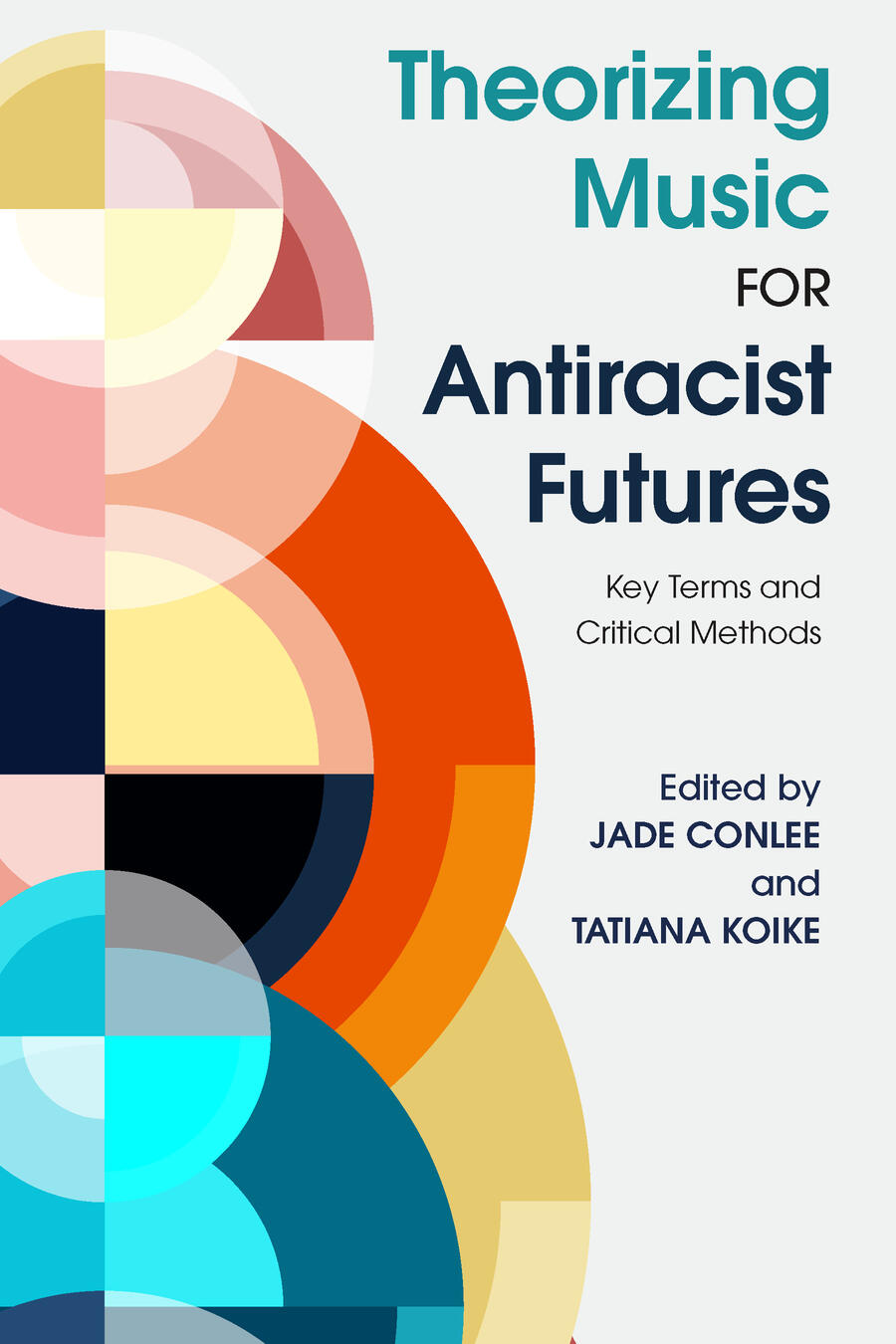
Theorizing Music for Antiracist Futures
Key Terms and Critical Methods
Explores complex histories and assumptions behind musical terms
Description
Every day, musicians and teachers use terms like “pitch,” “scale,” and “meter” to describe what music is made of and how it works. But what are the stories behind our musical terminology? Theorizing Music for Antiracist Futures contends that seemingly neutral musical terms are entangled with human histories of oppression and resistance. Bringing together scholars from music theory, ethnomusicology, music history, and popular music studies, the book reads music history alongside critical philosophies of race and ethnic studies to illuminate the power structures that inform musical description and analysis across disciplines. With each chapter focusing on a single musical term, topics covered include: how ancient Greek philosophers used “harmony” to promote peaceful relationships between the ruling class and their subordinates; how sixteenth-century European colonizers perceived Indigenous groups as “dissonant;” and how nineteenth-century scholars measured “pitch” to form now-discredited scientific proof of Europe’s cognitive and musical superiority over its colonized populations. Other chapters take a global perspective, examining theorizations of meter, scale, and musical texture in Japan, Iraq, Malawi, Georgia, and Central Africa. Theorizing Music for Antiracist Futures brings these histories to light and is a crucial volume in creating antiracist futures for music studies.
Jade Conlee is Assistant Professor of Music at the University of Virginia.
Tatiana Koike is a music educator, music theorist, and Japanese taiko artist.
Reviews
“Theorizing Music for Antiracist Futures offers powerful perspectives on music theory as a field and a practice, sourcing and sounding writerly voices from many registers. A watershed text that will inspire musicians, listeners, students, and scholars to work towards a more just world.”
- Ellie M. Hisama, University of Toronto
“Theorizing Music for Antiracist Futures: Key Terms and Critical Methods reframes the field of music theory itself by forcing it to come to terms with its exclusionist past. This volume is a compelling and timely work for the field of music theory, helping to understand how to be an antiracist music scholar.”
- Philip Ewell, Hunter College
“Theorizing Music for Antiracist Futures: Key Terms and Critical Methods is provocative in the best possible way. This volume represents a wide range of scholarly expertise and experience, and the authors draw upon sources and methods outside the music disciplines to offer refreshing new possibilities for moving the field forward.”
- Anna Gawboy, The Ohio State University