
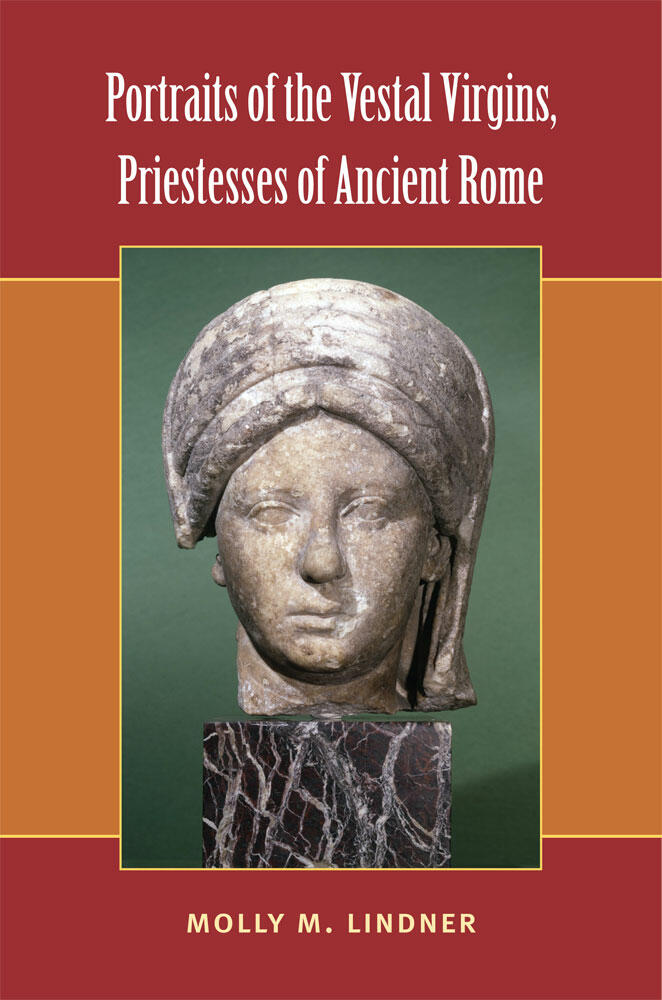
Portraits of the Vestal Virgins, Priestesses of Ancient Rome
Examines portraits of Rome’s Vestal Virgins as artistic documents and political vehicles
Description
For more than eleven hundred years, the Vestal Virgins dedicated their lives to the goddess Vesta, protector of the Roman state. Though supervised by a male priest, the Pontifex Maximus, they had privileges beyond those of most women; like Roman men, they dispensed favors and influence on behalf of their clients and relatives. In 1883, Rodolfo Lanciani, Director of Antiquities for Rome, discovered the first Vestal statues. The recovery of the Vestals’ house, and the objects contained therein, was an exciting moment in Roman archaeology. Newspapers were filled with details about the huge numbers of sculptures, inscriptions, jewelry, coins, and terracotta figures.
Molly M. Lindner examines the sculptural presentation of the Vestal Virgins and investigates what images of long-dead women tell us about their lives. She addresses why these portraits were created, and why they only began to appear in the late first or second century CE—much later than portraits of other Roman priestesses and nonimperial women. Lindner sheds light on the distinctions between a Vestal portrait and portraits of other priestesses, and considers why Vestal portraits do not copy each other’s headdresses and hairstyles. In addition to the extensive illustrations that complement the text, a catalog of all known Vestal portraits displays historical clues embedded in the hairstyles and facial features of the Vestals and other women of their day. In Portraits of the Vestal Virgins, Priestesses of Ancient Rome, Lindner has given a voice to the long-silent women of these extraordinary marble portraits.
Molly M. Lindner is Associate Professor (retired) in the Department of Art at Kent State University. She has published on portraits of women in antiquity and on the pedagogy of art history.
Reviews
"Linder’s overview of imagery related to the vestal virgins, esteemed priestesses of the goddess Vesta in Rome, is the first to treat the images as a group...Recommended."
- E A Dumser
--Choice
"...all you ever wanted to know and more...Thought-provoking statements aplenty for the Latinist or Roman historian to ponder."
- Alana Lukes
--CJ-Online
"This book combines some serious scholarship with much human interest. I commend it to all who enjoy the classics."
- Rupert Jackson
--Classics for All
"Readers interested in the archaeological history of the atrium Vestae, the connection between individual portraits and prevailing imperial styles, and the contribution that sculptural evidence can offer to the study of the second and third centuries will benefit from considering Lindner’s work as part of the scholarship on this period."
- Peta Greenfield
"A clear, closely observed book on a well-defined and important topic, in essence a microhistory of imperial art. It makes a contribution to our understanding of the representation of women in the Roman world, and also suggests how ... there is still much that remains to be done."
- Rachel Kousser