In Celebration of Copyeditors
Behind the Scenes with University Press Week
We work with a group of very talented, intelligent, and perceptive freelance copy editors who add quality to every project they edit for us at the University of Michigan Press. They are reliable, dedicated, insightful, and exceedingly professional. Our copy editors are well-read and well-educated with a broad knowledge of the world that allows them to bring an exceptional level of expertise to the projects they edit. They masterfully copy edit manuscripts on a wide range of subjects, including international relations, political science, history, literature, theater, Asian Studies, German Studies, classics, and many others. They often edit books by authors whose original language is not English, expertly helping to improve the flow of the sentences while understanding subtle cultural differences and respecting each author’s original voice.
Our copy editors work with a variety of style guides and citation systems. They are meticulous in spotting style inconsistencies and missing citation information, paying special attention to references and notes. They verify the spelling of proper names and fact-check information. In addition to their mastery of the mechanics of grammar and style, they also edit with an instinct for language that helps shape the presentation of the material while also retaining each author’s unique style. They often add queries to the authors if they feel a passage might benefit from a bit more description, sometimes suggesting alternate wording that might better express what the author is trying to say. Our copy editors are always respectful and professional in the questions they ask. When returning a project to us, they include both a detailed style sheet that describes the editing and a summary of their overall impressions of the book. These notes are helpful and valuable both to us and to our authors.
Our copy editors are a largely unseen but very important part of our publishing team, and our authors are universally grateful and appreciative for their work.
Feedback from Copy-Editors
Writing Beijing: History and Knowledge of the Capital by Naixi Feng
"This was a very intelligent and very well-written book. It’s one of the best that I have done in a long time. It’s a guide to Beijing and writings about it and how they changed with the changing political and intellectual contexts over more than 300 years. The author pays close and equal attention both to the text and the context. It is at once fascinating, enjoyable, and thought-provoking, and will be so both for those familiar with China and its history and for those with little such knowledge. The reader is aware throughout of an intelligence that is focused on understanding the character and significance of how the city is portrayed. I was really impressed by this book. This is a combination of close attention and analysis of the texts while setting them in their historical, cultural, and natural contexts, without any extraneous theorizing or wordiness. It’s rare to have an author who deeply understands their subject and can articulate why it matters succinctly and yet profoundly." —John Raymond
Practicing Classics: A Memoir by Lee T. Pearcy
“This is a beautifully written book, honest, modest, truthful, without sentimentality or moralizing, and thought-provoking. And the reader has no idea where it’s going, just as the past he teaches is open-ended and open to interpretation. It’s one of the most memorable books I’ve ever copyedited. It’s a personal memoir, but it speaks to much more: to life choices and choosing something valuable even though it’s less valued by society. It’s a model of giving a shape to a life by letting the subject you teach inform how you live and how you see your life. I hope his book is marketed to more than the classical community—he has a lot to say about teaching, about the last seventy years of American history, about accepting life as it comes, but giving it a meaningful shape, and about how to write, especially a memoir. And, secondarily, it's about being a professor and a teacher, and that should be of interest to many who are one or the other or both.” —John Raymond
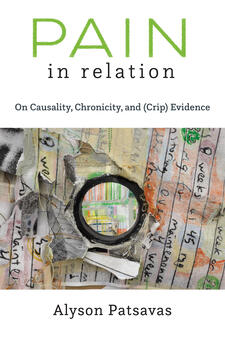
Pain in Relation: On Causality, Chronicity, and (Crip) Evidence by Alyson Patsavas
“What a pleasure it's been to work on this book. She's an unusually sophisticated writer—vivacious, entertaining, precise in her use of language, and skilled at using metaphor to convey her experience of pain. She works to make her points tangible, so that you understand them viscerally. She stays with you—I find myself thinking and talking about the book as I go about my daily life. One of her foundational points I hadn't previously appreciated. She criticizes the prevailing neoliberal perspective on chronic pain, which treats it as a matter of isolated personal responsibility. By contrast, a feminist perspective is more collective and socialist. I hadn't really explicitly grasped that this is an underlying principle of feminism—that shared collective responses are more humane and effective. I think it's a book to be proud of.” —Dan Otis
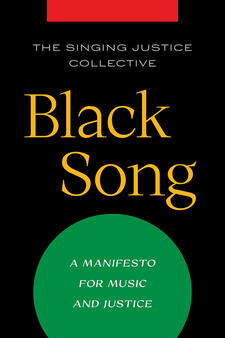
Black Song: A Manifesto for Music and Justice by The Singing Justice Collective
“I enjoyed working on this book. The final version reflects the authors’ collaborative approach. Diverse as they were as a group, they felt they had to get to know and trust each other, and that took a lot of extra, very personal work. They pulled it off, and it shows in every chapter. They make their points carefully, but their accounts are consistently moving, passionate but fair-minded and scholarly. I would have enjoyed attending the classes and seminar recitals the authors describe. As it was, I kept stopping to listen to Big Mama Thornton and Marvin Gaye. The book was well written throughout.” —Dan Otis
Intersex Figures in Modern Japanese Literature and Art by Leslie Winston
“The book was well written . . . and interesting. I was especially struck by one of the women in the book, Shimizu Shikin, who was a journalist in Japan in the late 1800s and who was a women's rights activist. Such an amazing and impressive person to be a professional writer and advocating for women so long ago in such a culturally strict environment. Very inspirational to say the least.” —Cheri Bowman
When and Where They Enter: Black Women’s Candidate: Emergence at the State Level by Jamil S. Scott-Cummings
“I enjoyed the Scott-Cummings book. It's an interesting moment to have worked on a book about the questions Black women must consider when deciding whether to run for office . . . Especially interesting to me was the material on how Black candidates may feel they have to adjust their speech, behavior, and clothes—their entire presentation—to avoid being subject to racial stereotypes.” —Dan Otis