Beyond the Rulebook
Homebrew and the Ethos of Pathfinder
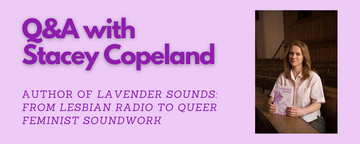
This guest author post is by Scott DeJong & Marc LaJeunesse, authors of Their System, Our Game: Homebrew and the Worlds of Pathfinder. The book is available in paperback and accessible ebook formats.
If someone makes a game, how much can you change? Are the rules up for debate? The world? The story? Or its characters? Some games might be more open to change than others but what if the change you make isn’t to alter how you play but what you play. Welcome to the world of homebrew, a staple in the world of Table Top Roleplaying Games (TTRPG) where players and their game masters (GM) create new worlds, gods, characters, and classes to tell the stories that matter to them. To a homebrewer a rule is an invitation to create.
When talking about TTRPGs, you might be familiar with Dungeons & Dragons, but there are countless other role-playing experiences out there. We want to bring your attention to their biggest competition: Pathfinder. In our new book we look at the relationship between homebrew and Pathfinder to trace homebrew as an ethos that exists in tabletop role-playing that is especially visible through the Pathfinder game system and the culture that developed around it. As a practice, homebrew is player-driven and alters the rules, themes, and aesthetics of a published game to the desires of a specific group of players. Fans of a game take the rules that designers created and shift them and the narrative setting to best serve their interests. It is game making, jamming, and modding all around a particular vision: to tell the story that is best for your table.
In some ways, Pathfinder emerged kind of as a homebrew to D&D. The behemoth of a TTRPG had established a strong fan base, but many players craved more content or slight changes from the rules that were offered. They wanted more adventures, types of characters, and enemies to face and Paizo (the creator of Pathfinder) was initially a third party creator for D&D. However, this changed when D&D ended their licensing deal with Paizo, and so Paizo then created their own game, Pathfinder, and many fans followed suit.
At the heart of Paizo’s work, homebrew drove their design. They started building on D&D but when they made their own system they thought about what affordances they could provide in their rules to further help players homebrew these systems. Golarion, the world they made for their game, became a kitchen-sink where ideas can quickly be added and thrown together as the game and its fans expanded. Pathfinder grew in popularity to the point where it briefly surpassed D&D as the most popular game, and this was partially due to its focus on creating a space for players to add onto their story.
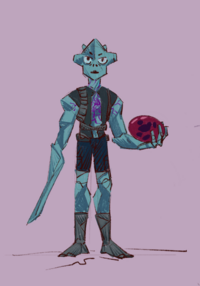
Homebrew is more than just creating. It involves a vision, a desire for change, and often creates something bespoke to the players that are there. For our book, we interviewed over 14 homebrewers who discussed their desire to make things that the current rules did not already have. They were adding to the structure Pathfinder provided. Community-made additions like Queerfinder focus on LGTBQ2S+ representations within Golarion. Third-party makers would bring in cultural representation that is often ignored in these games, and individual homebrewers would include their individual interests and cultural backgrounds that have been less represented historically. In each case, homebrew functioned as a form of creative expression that helped the audience connect better to the game.
We discuss homebrew as an ethos because it carries into the expectations from players, design of the game, and fan and company culture behind it. Players are driven to create because Pathfinder and Paizo are challenging the norms set by D&D in and out of the game. In the rules Pathfinder constantly asked why not, making characters that were typically villains in D&D (like goblins and kobolds) playable ancestries in Pathfinder. While D&D has since followed suit, Pathfinder has consistently looked to add options that other games might not cover.
Outside of the game, Paizo has traditionally been positioned as a scrappier alternative to Wizards of the Coast. When Wizards of the Coast (D&D’s parent company) again tried to change copyright rules for third party makers creating mass community backlash, Paizo proceeded to put their game license under an open creative license managed by a third party to try and keep it within the public domain. While it still posed some problems for third party creators, the company has consistently pushed for players to be able to create.
The challenge of homebrew is where it ends. As researchers, for our book, we decided to build our own homebrews. Working with players we built two fully homebrewed campaigns. We made new abilities, classes, ancestries, worlds, and enemies all using the Pathfinder 2e ruleset. Yet, as we shifted the campaigns from our tables to publishing them with the book, we noticed just how specific homebrew can be. As third party creators have also attested, there is a line between designing for your small table of players and a larger audience.
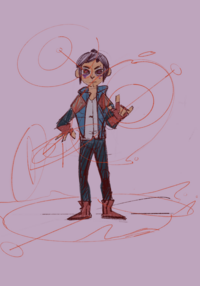
Our homebrews are silly and might not be the most balanced thing. We have potted plants that can move through the world seeing it via spores, and a campaign that slowly kills players if they take too long to complete it. These might not work for every table, but they worked for our players; and that is what makes homebrew so powerful as a storytelling and game design tool. Importantly, it wouldn’t be possible without the strong foundations of the core Pathfinder systems that are iterated upon through homebrew.
At the end of the day, we were inspired to undertake the project that became this book because as players and GMs we were moved and inspired by games of Pathfinder. Both editions of the game itself are deep, engaging, and fun TTRPG game systems, but we most fell in love with Pathfinder as a platform for player expression, amateur game design, and storytelling. We are not alone, and we were lucky enough to speak with players with hundreds of pages of homebrewed worlds, self-published content, and innovative rules changes that never leave their tiny play group. Pathfinder players share an appreciation of the rules, world, and aesthetic, and that appreciation drives more creativity. Our hope is that this book introduces new players to the possibilities of this incredible game and the passion of its players, and celebrates the history and practice of homebrewing with Pathfinder that bring so many friends and strangers alike together around the table.