Faith, Memory, and Living Together
Reading Malaika and the Seven Heavens

This is a guest author blog by Toyin Falola, author of Malaika and the Seven Heavens. The book is now available in hardcover, paperback, and open access.
In an era of globalization where religious traditions are increasingly intertwined, now harmoniously, now begrudgingly, with one another, individual stories convey as much as books or pamphlets do on the matter of public policy. In Malaika and the Seven Heavens, I draw upon my experiences with Islam, my childhood in Ibadan, where it coexisted with African Traditional Religion, and my subsequent life in a Christian environment, as a way of trying to capture the subtlety of religion, identity, and belonging.
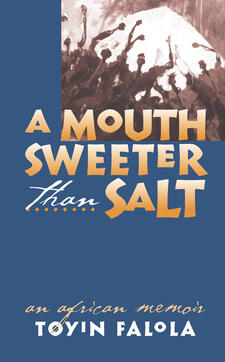
This is the third of a series of memoirs. A Mouth Sweeter Than Salt speaks to my childhood, tracking how Yoruba culture, colonial heritage, and family constructed boyhood. Counting the Tiger's Teeth followed my adolescence through the events of the Agbekoya peasant rebellion, when the agitations of Nigerian society pulled both religions and communities tight. Malaika and the Seven Heavens draws upon these foundations, as well as, in relation to religion, Islamic practice cycles, and experiences with Muslims and non-Muslims that enriched and complicated my understanding of religion's presence in everyday life.
What the book strives to reveal is that Islam, a living religion like any other, is more than a dogma. It is prayers and songs that frame a child's memory. It is the ring of Qur'an recitation from a madrassa. It is the way that Islamic music saturates Yoruba life, women's roles in religious society, pilgrimage defined, or conflicts over healing practices based on indigenous medicine and prayer in Islam. They are lived moments, small and human, that demonstrate how a religion translates across languages, ethnicities, and nation-state boundaries.
Whereas my earlier memoirs shed light on how colonialism and resistance structured everyday life, Malaika and the Seven Heavens situates these religious encounters within a broader framework. Nigeria's religious diversity has never been an arena of easy give-and-take, but rather one of negotiation, occasionally tense and occasionally adamant. My own is only one thread in this broader tapestry, but it indicates how religion is envisioned, experimented with, and reimagined in the settings of pluralism.
This is above all not a book of theology. I am not as concerned with theological belief as with how people practice their faith. How niceness, justice, and compassion emerge as evidence of faith. How different faith traditions intersect in practice yet diverge in principle. How individuals, Muslims, Christians, and traditionalists meet in the shared space of common humanity. Sometimes my experiences of Islam were moments of beauty, moments of profound connection beyond boundaries. Sometimes they were moments of discomfort, doubt, or even conflict. But religion, and life, is lucidity and enigma. To remain open to these contradictions, to appreciate the true richness of religious life, is to live a good life. Just as music teaches us that no one riff or beat defines a song, no one story establishes a religion. I hope that Malaika and the Seven Heavens inspires dialogue across differences, increases our appreciation of diversity, and reminds us of our shared humanity.