
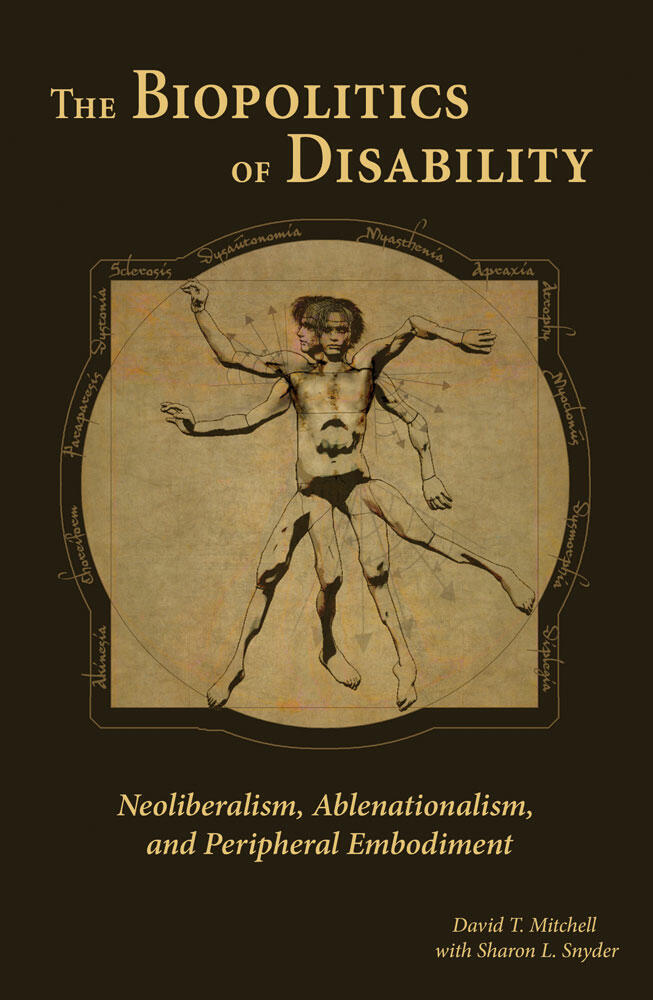
The Biopolitics of Disability
Neoliberalism, Ablenationalism, and Peripheral Embodiment
Theorizing the role of disabled subjects in global consumer culture and the emergence of alternative crip/queer subjectivities in film, fiction, media, and art
Description
In the neoliberal era, when human worth is measured by its relative utility within global consumer culture, selected disabled people have been able to gain entrance into late capitalist culture. The Biopolitics of Disability terms this phenomenon “ablenationalism” and asserts that “inclusion” becomes meaningful only if disability is recognized as providing modes of living that are alternatives to governing norms of productivity and independence. Thus, the book pushes beyond questions of impairment to explore how disability subjectivities create new forms of embodied knowledge and collective consciousness. The focus is on the emergence of new crip/queer subjectivities at work in disability arts, disability studies pedagogy, independent and mainstream disability cinema (e.g., Midnight Cowboy), internet-based medical user groups, anti-normative novels of embodiment (e.g., Richard Powers’s The Echo-Maker) and, finally, the labor of living in “non-productive” bodies within late capitalism.
David Mitchell is Professor of English and Sharon L. Snyder is a faculty member at George Washington University.
Reviews
"Through analyses of films and novels featuring individuals with disabilities, the authors establish the potential for persons with disabilities to rupture normative identities of belonging…Recommended."
- J.L Croissant
--Choice Reviews
"...informative and a great call-to-arms for Disability Studies, the academic Humanities, and the disability rights movement."
- Anna Hamilton
--Disability Intersections
"Drawing on a wealth of knowledge that extends from graduate student bloggers, to his own family, to his own extensive and deep reading in a number of different scholarly disciplines, as well as his twenty-five years working directly in disability activism and the disability arts and culture movements, Mitchell offers readers another way of thinking about disabled subjectivities."
- Disability Studies
--Disability Studies
"Most useful in offering a conceptual approach to the materiality and creative potential of disability in today’s neoliberal world that cannot be achieved with the social and affirmative models of disability."
--The Drama Review- The Drama Review