
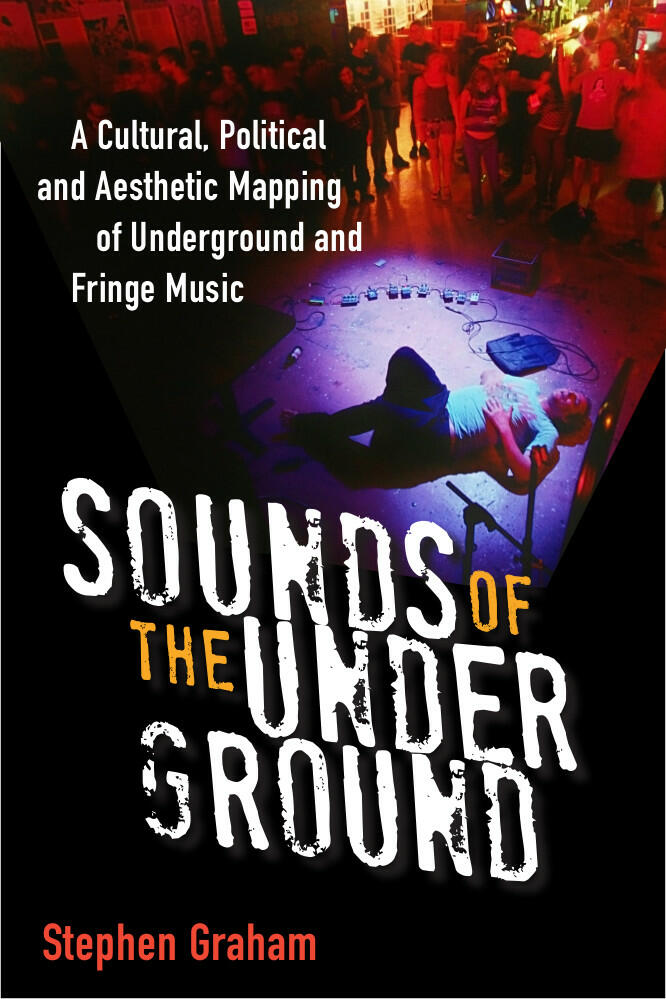
Sounds of the Underground
A Cultural, Political and Aesthetic Mapping of Underground and Fringe Music
The first scholarly examination of underground music in the digital age
Description
In basements, dingy backrooms, warehouses, and other neglected places around the world music is being made that doesn't fit neatly into popular or classical categories and genres, whose often extreme sounds and tiny concerts hover on the fringes of these commercial and cultural mainstreams.
The term “underground music” as it’s being used here connects various forms of music-making that exist outside or on the fringes of mainstream institutions and culture, such as noise, free improvisation, and extreme metal. This is music that makes little money, that’s noisy and exploratory in sound and that’s largely independent from both the market and from traditional high art institutions. It sometimes exists at the fringes of these commercial and cultural institutions, as for example with experimental metal or improv, but for the most part it’s removed from the mainstream, “underground,” as we see with noise artists such as Werewolf Jerusalem or Ramleh, obscure black metal artists such as Lord Foul, and improvisers such as Maggie Nicols. In response to a lack of previous scholarly discussion, Graham provides a cultural, political, and aesthetic mapping of this broad territory. By outlining the historical background but focusing on the digital age, the underground and its fringes can be seen as based in radical anti-capitalist politics or radical aesthetics while also being tied to the political contexts and structures of late capitalism. The book explores these various ideas of separation and captures, through interviews and analysis, a critical account of both the music and the political and cultural economy of the scene.
Stephen Graham is Lecturer of Music at Goldsmiths, University of London.
Supplemental Materials
Chapter Seven
John Olson’s Inzane State Journal Vol. 2, American Tapes (John-Olson American Tapes TM)
Chapter Eleven
Spectrum analysis of “Woodpecker No. 1”
Spectrum analysis of first four-and-a-half minutes of “Bound”
Spectrum analysis of first three minutes of “Norse Fumigation”