
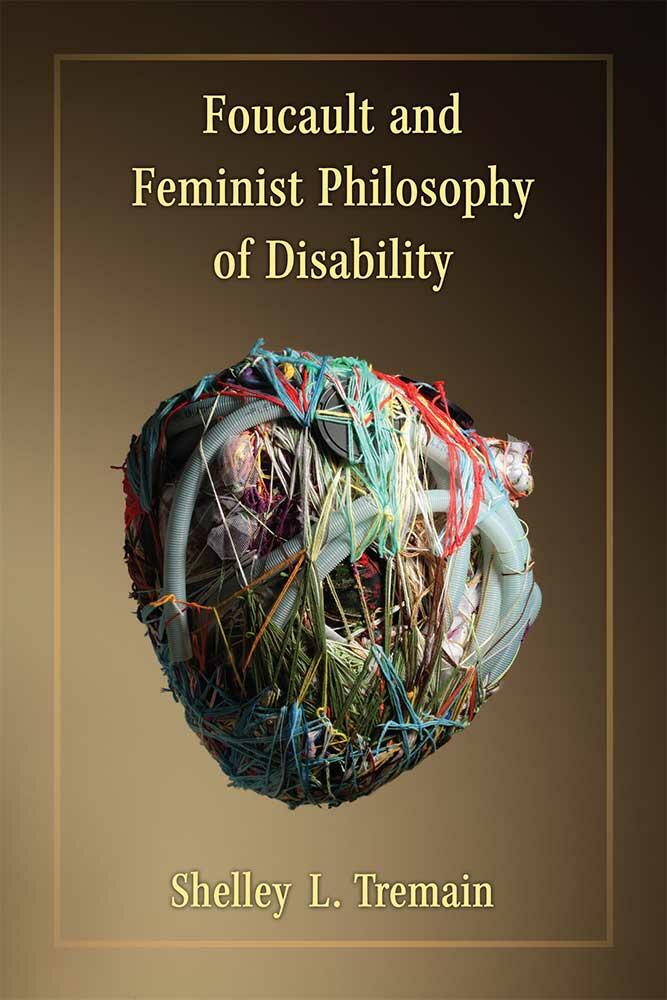
Foucault and Feminist Philosophy of Disability
Addresses misrepresentations of Foucault’s work within feminist philosophy and disability studies, offering a new feminist philosophy of disability
Description
Foucault and Feminist Philosophy of Disability is a distinctive contribution to growing discussions about how power operates within the academic field of philosophy. By combining the work of Michel Foucault, the insights of philosophy of disability and feminist philosophy, and data derived from empirical research, Shelley L. Tremain compellingly argues that the conception of disability that currently predominates in the discipline of philosophy, according to which disability is a natural disadvantage or personal misfortune, is inextricably intertwined with the underrepresentation of disabled philosophers in the profession of philosophy. Against the understanding of disability that prevails in subfields of philosophy such as bioethics, cognitive science, ethics, and political philosophy, Tremain elaborates a new conception of disability as a historically specific and culturally relative apparatus of power. Although the book zeros in on the demographics of and biases embedded in academic philosophy, it will be invaluable to everyone who is concerned about the social, economic, institutional, and political subordination of disabled people.
Shelley L. Tremain holds a Ph.D. in Philosophy and has taught in Canada, the U.S., and Australia. This book was awarded the 2016 Tobin Siebers Prize for Disability Studies in the Humanities. The author was also the 2016 recipient of the Tanis Doe Award for Disability Study and Culture in Canada.
Reviews
"Tremain’s book is rich with ideas about how disability, philosophy, and feminism fit together. Her work intervenes in a conversation about disability and philosophy using research from a reconstructive-conceptual and metaphilosophical sphere, arguing that the two inform (and co-constitute) each other. ... Foucault and Feminist Philosophy of Disability is useful not only for scholars working in disability studies or academic philosophy but for all scholars who are interested in interrogating complex power relations in a way that attends to culture, history, and materiality. Tremain’s analysis is a masterful example of complex theoretical thinking supported by meticulous research and close reading."
- Tabetha K. Violet
-- International Journal of Feminist Approaches to Bioethics
Winner: 2016 Tobin Siebers Prize for Disability Studies in the Humanities
- Tobin Siebers Prize