Foreign No More
Writing about China’s Ethnic Minorities as an Epistemological Experiment
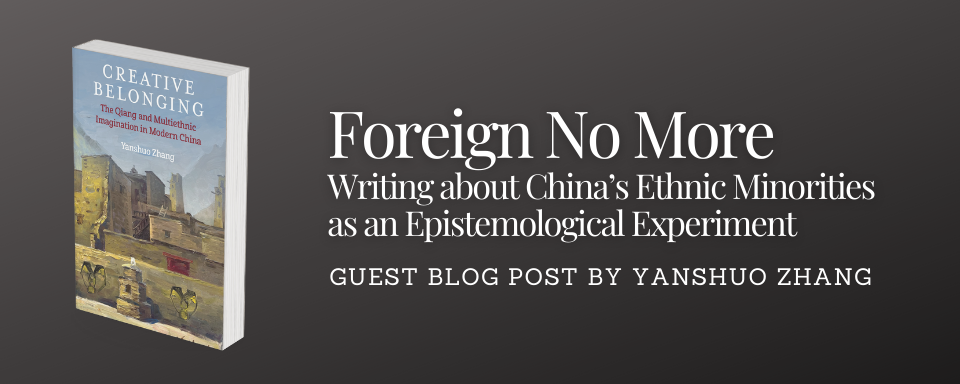
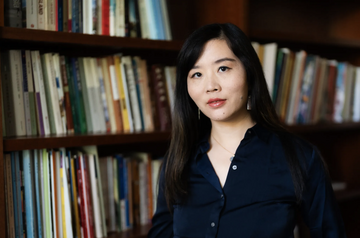
Photo courtesy of Pomona College
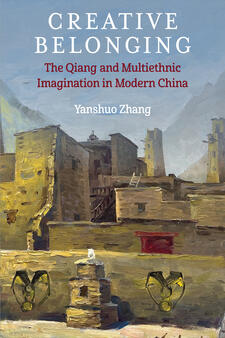
This guest author post is by Yanshuo Zhang, author of Creative Belonging: The Qiang and Multiethnic Imagination in Modern China. The book is now available in hardcover, paperback, and open access.
When I was about eleven years old, one summer, my parents took me to visit a Tibetan village by the name of “Miyaluo,” tucked away in the high mountains of my native Sichuan province, a multiethnic province in southwest China. After returning, I enthusiastically shared about my travels with my schoolmates. “But in which country is Miyaluo located?” One schoolmate inquired with curiosity. “Is it in Australia?”
The eleven-year-old me was dumbfounded but lacked the vocabulary to tell my confused friend that despite its foreign-sounding name, Miyaluo is located in the Aba Tibetan and Qiang Autonomous Prefecture and was only a few hours away by driving from Chengdu, the provincial capital of Sichuan, where I went to school before college. To a lot of my urban-educated friends in China, the country’s many ethnic minorities, especially those from the rural regions, fell outside of their personal and educational purview.
Fast forward fifteen years or so, I was a PhD student in the United States. “How can you study your home province and do justice to its history and culture objectively when you grew up there?” One time, when I talked to someone about my desire to study the Qiang minority group in Sichuan as a dissertation topic, the person in front of me didn’t fully appreciate how a “native” scholar from a certain region can generate new or useful knowledge about that region.
Even though the two instances happened almost two decades apart and the questions came from people that diverged significantly in age and social backgrounds, as I reflect on my decades-long journey of engaging with the minority groups in Sichuan and in China, I cannot help but think about the perpetual cultural and conceptual “foreignness” of China’s ethnic groups to many, both in the scholarly community and in the general public. Well-intended as the two inquirers in my story may be, approaching China’s ethnic minorities seemed challenging for them conceptually, culturally, and epistemologically. In reality, China’s ethnic minorities are far from isolated, “foreign” objects of study: the fifty-five officially recognized ethnic minority groups in China occupy linguistic and cultural terrains stretching from the high Tibetan Plateau to the vast Mongolian grasslands; they connect to the peoples and communities in Central Asia, Southeast Asia, Northeast Asia, and beyond. These ethnic groups are speakers of some of the world’s most diverse languages, from the Sino-Tibetan language family and its many speakers that belong to indigenous groups in the Himalayas in China, Nepal and Bhutan to the Altaic language family and its many nomadic variations crossing Inner and Central Asia. As scholars and students of cultures, what would happen if we change our perceptions of China’s ethnic minorities and see them as exciting meeting points that connect communities, histories, and cultures?
As a U.S.-trained scholar who grew up in China and has picked up many Asian and European languages along the way, my multilingual and multidisciplinary scholarly and personal background has propelled me to treat the writing of China’s ethnic minority groups as a site for epistemological experiments and innovations for a global audience. How to make China’s vast and diverse ethnic minority groups a viable and accessible source of scholarly inquiry and cultural knowledge to the world? How to represent ethnic groups beyond the simplifying tendency of mythologization (as probably in the case of my innocent elementary school friend) and binarity (as in the case of the person who questioned my ability to “objectively” study my home province as if knowledge should only come from a disembodied space)? Moreover, how have China’s shaoshu minzu (ethnic minorities) themselves become creative agents and active producers of knowledge in the contemporary world, carving out spaces of political, cultural, and social belonging within the parameters of multiculturalism in today’ China? Those questions guided me as I transformed my doctoral dissertation into a scholarly book titled Creative Belonging: The Qiang and Multiethnic Imagination in Modern China (University of Michigan Press, January 2026).
To write this book, I crossed many boundaries and questioned many conventions, contributing to pushing the frontiers of knowledge in the humanities. For example, while traditionally the word and the concept of “ethnography” were associated with the practice of ethnographic writing as an anthropological enterprise, I discuss and theorize about a new wave of indigenous filmmaking in southwest China as acts of “ethnographic poetics” (Chapter 4). Analyzing indigenous mother-tongue films produced in the Qiang regions, I define ethnographic poetics as “the visual, cultural, textual, and affective engagement with ethnographic methodologies and narrative powers” in Chinese minority cinema (158). In other words, I go beyond “ethnography” as a professional, disciplinary practice rooted in anthropology to probe into the creative worlds of Chinese minority cinema. I call this “ethnography as methodology.”
Similarly, while history and literature are generally treated as two separate fields in the academy, I look at how historical and literary imagination converges in the construction of the Qiang identity in China. One prominent example of this is the state history-making project in China that gave birth to a series of books titled The Concise Histories of the Ethnic Minorities of China. I closely study the Volume on the Qiang within this series in Creative Belonging. Initiated in the 1950s and completed in the 1980s, this book heavily recycles pre-modern Chinese literary imageries, such as the Qiangdi (Qiang reed pipe) recurrent in Tang-dynasty poetry, to articulate for the importance of the Qiang in China’s civilizational prosperity and interethnic solidarity. It is in this ambivalent but creative space where “literary” and “historical” imagination converges that the “Qiang” has been constructed as one of China’s oldest and longest-lasting ethnic entities in Chinese textual sources and modern national narratives.
Despite being one of the smaller ethnic groups in today’s China, the Qiang regions have long been a target of international cultural, scholarly, and even colonial endeavors. In the early 20th century, Anglo-American and other Western missionaries and scientists such as Thomas Torrance (1871-1959) ventured into the Qiang regions of Sichuan. A zealous Scottish Presbyterian missionary, Torrance went so far as to claim that the Qiang were a lost tribe of the ancient Israelites and their white stone worship a testimony to their religious adherence to ancient Jewish traditions. Even though Torrance’s thoughts and ideas have been controversial, his experience in the Qiang regions is a telling example of how the Qiang, as well as many other ethnic groups in China, have long been embedded into a densely interconnected web of global knowledge-making.
Creative Belonging traces the sometimes-unexpected connections and forgotten cultural phenomena that have shaped the Qiang as simultaneously an indigenous and a global ethnic group. As a scholar born and raised in Sichuan but educated internationally, I would like to think about my positionality as decidedly hybrid and multivalent: my understanding of the Qiang identity does not come from a single source, but is representative of my generation of multilingual, multicultural young Chinese and Asian scholars who have embarked on a global scholarly journey. In this sense, I am not strictly a “native” scholar, if by “native” we mean someone who has rarely left their country of origin and is primarily informed by native epistemes. Rather, I position myself as a global scholar rooted in community-based research and conscious about how knowledge about the “indigenous” is produced at the intersections of different institutional, cultural, and personal practices.
Anthropologists have long articulated the merit of returning to an ethical, community-oriented, and self-reflective practice of research that does not dismiss the indigenous subject as a pristine, ignorant “other,” but as a source of rich knowledge in and of itself. I have long been influenced by anthropological scholarly output such as Decolonizing Methodologies: Research and Indigenous Peoples by Linda Tuhiwai Smith and James Clifford’s Returns: Becoming Indigenous in the Twenty-first Century. I have further benefited from thinking about the whole “writing culture” and “writing against culture” debate in anthropological scholarship. While Creative Belonging is not an autoethnography, it thinks carefully about questions of positionality, both my own and the positionalities of persons and sites of knowledge production from indigenous, national, and global perspectives.
If we treat the “Qiang” (or any other ethnic group) simply as static objects for study, we would fall into the silos of partial, ahistorical, and narrow knowledge. However, if we expand the discursive and epistemological domains of the “Qiang” as a cultural symbolism open to immense creative remaking, as I do in Creative Belonging, we will arrive at dynamic, evolving, and interdisciplinary understandings of ethnic identities and human communities. It is my hope that Creative Belonging serves not only as a subject-specific treatment of one ethnic group or even the minority cultures in China, but as an invitation to scholars and students interested in exploring cross-disciplinary possibilities and discovering the many surprises that await in thinking about a community beyond its immediate temporal and spatial surroundings. When we cease to see something we are not familiar with as “foreign” and begin to see its connections to multiple times, spaces, and communities, a new world of epistemological innovations may open up.