Celebrating the Newest Big Ten Open Books Collection: Indigenous North Americans
The University of Michigan Press is proud to participate in the Big Ten Open Books project.
The first Big Ten Open Books Gender and Sexuality Studies Collection was launched in 2023 and included twenty-four books by the University of Michigan Press.
To celebrate the launch of the second Big Ten Open Books Collection, Indigenous North Americans, we’ve chosen to highlight five of the twelve University of Michigan Press books that were selected for inclusion in the 100 open access book collection, giving readers easy access to this vital subject collection.
Indian Names in Michigan by Virgil J. Vogel
Indian Names in Michigan traces the origin of hundreds of place-names given to counties, towns, lakes, rivers, and topographical features of the Great Lakes State. These melodic names that enrich our appreciation for the romantic past of our state record the culture and history of both the American Indian and the white settler. Most of the Indian names borne by Michigan's cities, counties, lakes, and rivers are those of Indian tribes and individuals. Settlers named places not only for the resident tribes, but also for tribes in the West that they had never seen. Indian Names in Michigan is written for all local history enthusiasts and anyone interested in Indian history and culture.
The Indians of Hungry Hollow by Bill Dunlop and Marcia Fountain-Blacklidge
Michael Blake's Dances with Wolves transformed denigrating Indian stereotypes and created widespread interest in Native American culture. The subsequent popularity of books on this topic underscores the power of a tale well told. While Blake's story relates the early chapters of Native Americans' survival struggles, later accounts of this struggle remain untold. The Indians of Hungry Hollow authentically presents these later chapters. The days of Hungry Hollow have long passed, but the opportunity to capture its lessons of community, strong values, and an urge to thrive in matters of the heart and soul are still very much with us.
The situations are often dire: winter in the middle of the Depression; an Indian settlement illegally taken from its inhabitants and set on fire; boaters stranded by bad weather and threatened with death. But if the situations are extreme, the telling of the stories is consistently optimistic yet completely without self-pity or sentimentality, and the characters always find a way through the darkness.
Faith in Paper: The Ethnohistory and Litigation of Upper Great Lakes Indian Treaties by Charles E. Cleland
Faith in Paper is about the reinstitution of Indian treaty rights in the Upper Great Lakes region during the last quarter of the 20th century. The book focuses on the treaties and legal cases that together have awakened a new day in Native American sovereignty and established the place of Indian tribes on the modern political landscape.
In addition to discussing the historic development of Indian treaties and their social and legal context, Charles E. Cleland outlines specific treaties litigated in modern courts as well as the impact of treaty litigation on the modern Indian and non-Indian communities of the region. Faith in Paper is both an important contribution to the scholarship of Indian legal matters and a rich resource for Indians themselves as they strive to retain or regain rights that have eroded over the years.
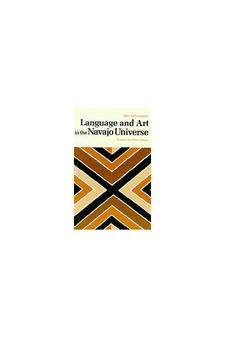
Language and Art in the Navajo Universe by Gary Witherspoon
Language and Art In the Navajo Universe is a complex and theoretical study on the roles of language and art in Navajo culture, resulting from nearly a decade of research on the Navajo reservation. The structures of Navajo thought, language, speech, and knowledge are used to frame discussions on a number of topics. Primary among these from a cosmological perspective are the concepts of inner and outer forms in the duality of nature coupled with static and dynamic concepts of motion. Also explored is the importance of language in ritual control and perceptions of action, causality, and plurality.
Two terms essential to the Navajo ethos are semantically explored as organizing principles. The first is the concept of k'T which finds its primary expression in the patterning of kin relationships and solidarity. The second is h=zh=, which is most easily glossed as representing Navajo ideals of harmony and order. Art examples, represented by music, sand painting, and weaving, are used to demonstrate how these complex semantic and cosmological considerations find their way into Navajo daily ritual life. Information is also included on color classification, numerology, mythology, ethnophysocology, and taxonomies. The conclusions expand the data into summary statements of Navajo ethos.
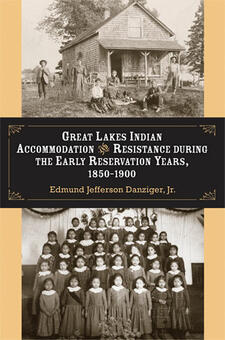
Great Lakes Indian Accommodation and Resistance during the Early Reservation Years, 1850-1900 by Edmund Jefferson Danziger, Jr.
During the four decades following the War of 1812, Great Lakes Indians were forced to surrender most of their ancestral homelands and begin refashioning their lives on reservations. The challenges Indians faced during this period could not have been greater. By century's end, settlers, frontier developers, and federal bureaucrats possessed not only economic and political power but also the bulk of the region's resources. It is little wonder that policymakers in Washington and Ottawa alike anticipated the disappearance of distinctive Indian communities within a single generation.
However, these predictions have proved false as Great Lakes Indian communities, though assaulted on both sides of the international border to this day, have survived. Great Lakes Indian Accommodation and Resistance is a lively and insightful book documents the story of these Great Lakes Indians—a study not of victimization but of how Aboriginal communities and their leaders have determined their own destinies and preserved core values, lands, and identities against all odds and despite ongoing marginalization.