
Books for Understanding: Honoring International Human Rights Month

International Human Rights Law has outlined common standards for protecting economic, social, cultural, civil, and political rights, rights that are “inherent to all human beings, regardless of race, sex, nationality, ethnicity, language, religion, or any other status.” Universal Human Rights Month, recognized each December, is the perfect time to consider the laws that protect our rights as well as to examine where the world is falling short in protecting vulnerable groups.
Below, we’ve gathered a brief list of thought-provoking books (many of which are free-to-read online) that explore the fight for equality, justice, and dignity across the globe. If you want to find more, you may be particularly interested in the series Law, Meaning, and Violence, Ethnic Conflict: Studies in Nationality, Race, and Culture, and Corporealities: Discourses of Disability.
- Book of the Disappeared: The Quest for Transnational Justice, edited by Jennifer Heath and Ashraf Zahedi (2023). The authors argue that the search for the disappeared must be conducted for three reasons: to locate, identify, and return the remains of the disappeared to family members for proper burial; to gather evidence to hold perpetrators accountable; and to set the historical record straight.
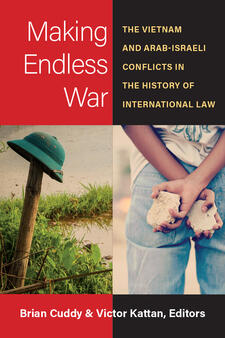
- Making Endless War: The Vietnam and Arab-Israeli Conflicts in the History of International Law, edited by Brian Cuddy and Victor Kattan (2023). In their review, the LSE Review of Books wrote that this book “provides a powerful statement on how episodes of violence, however specific they might appear, cannot be understood independent of greater forces – including (and perhaps especially) the principles and institutions that present their mission as an effort to constrain armed conflict.”
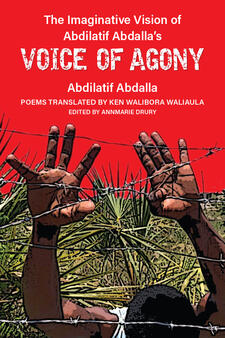
- The Imaginative Vision of Abdilatif Abdalla’s Voice of Agony, Poems Translated by Ken Walibora Waliaula, edited by Annmarie Drury (2024). The extraordinary Swahili poetry collection Sauti ya Dhiki (Voice of Agony) is a collection of prison poems composed by Abdilatif Abdalla between 1969 and 1972. He originally wrote the poems while incarcerated by the government of Jomo Kenyatta for sedition as a result of his political activism and smuggled them out of prison on scraps of paper. The Muslim Times writes that, “It stands as an indispensable resource, showcasing the enduring power of poetry as a tool for resistance and emancipation.”
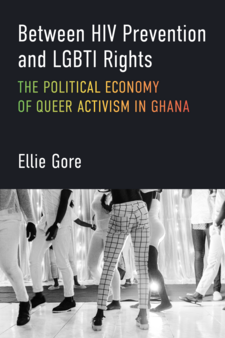
- Between HIV Prevention and LGBTI Rights: The Political Economy of Queer Activism in Ghana by Ellie Gore (2024). With queer men bearing a disproportionate burden of HIV in Africa, rights-based health interventions have sought to tackle the epidemic by bringing together, educating, and ‘empowering’ queer African communities. The book offers insights into the political economy of sexuality and global development for scholars, activists, and policymakers seeking to understand and address sexual injustice and oppression, both in Africa and beyond. An open access edition of the book was made possible through the support of the Economic and Social Research Council (UK).
- Protest Arts, Gender, and Social Change: Fiction, Popular Songs, and the Media in Hausa Society across Borders by Ousseina D. Alidou (2024) explores how a new generation of novelists, popular songwriters, and musical performers in contemporary Hausa society are using their creative works to effect social change. In these narratives, the oppressed and marginalized articulate their experiences with social ills, including gender-based violence and social inequalities exposed by biomedical health pandemics such as HIV and COVID-19.
- The Remarkable Rise of Transgender Rights by Jami Kathleen Taylor, Donald P. Haider-Markel, and Daniel Clay Lewis (2018). This book received an honorable mention from the APSA Human Rights Section Best Book Award and focuses on the growth of the transgender rights movement despite its marginalized status in the political system.
- Lawyers Beyond Borders: Advancing International Human Rights Through Local Laws and Courts by Maria Armoudian (2021) is about how, in the face of powerful interests and seemingly insurmountable obstacles—political, psychological, economic, geographical, and physical—a small group of lawyers and survivors have navigated a terrain of daunting barriers to begin building, case-by-case, new pathways to justice for those who otherwise would have none. Human Rights Quarterly writes that “this book is a very valuable contribution to those of us who want to understand the processes by which human rights are promoted at the local level and the ways in which these local practices translate into transnational practices. Armoudian has collected a wealth of information about the ways to pursue justice when it appears that there is no path to justice (especially when the victims are from countries without a functioning legal system).”
- Cheap Talk: Disability and the Politics of Communication by Joshua St. Pierre (2022) explores how technologies, like social media and the field of speech-language pathology, create sites of contact that are exclusionary for disabled speakers. The book looks at the political possibilities of disabled voices to “de-face” the power of speech to create new spaces for belonging.
- Torture, Humiliate, Kill: Inside the Bosnian Serb Camp System, by Hikmet Karcic (2022). This is a case study of the human rights abuses that occur in war, drawing on the 1992 (Muslim) Bosnian and (Christian) Serbian conflict that has attracted a lot of comparative interest.
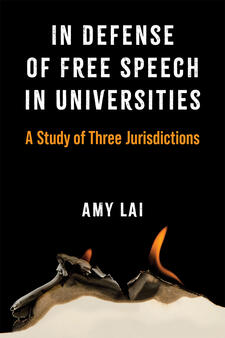
- In Defense of Free Speech in Universities, by Amy T. Y. Lai (2023). Looking at numerous free speech disputes in the United Kingdom, the United States, and Canada, the book argues for the equal application of the free speech principle to all forms of expressions to facilitate respectful debates.
- Presidential Accountability in Wartime: President Bush, the Treatment of Detainees, and the Laws of War, by Stuart Streichler (2023). Using the treatment of war-on-terror detainees under President George W. Bush as a case study, the author integrates international humanitarian law into a constitutional analysis of the repercussions of presidential war powers for human rights around the world.
- Beyond the Death of God: Religion in 21st Century International Politics, edited by Simone Raudino and Patricia Sohn (2022). Beyond the Death of God offers new, local voices to Western audiences—through essays that suggest the need for an appreciation of Divinity as a quintessence holding a significant place in the hearts, minds, social orders, and political organization of polities around the world.
Books Mentioned In This Post
Between HIV Prevention and LGBTI Rights

Protest Arts, Gender, and Social Change
The Imaginative Vision of Abdilatif Abdalla’s Voice of Agony
Poems Translated by Ken Walibora Waliaula

Presidential Accountability in Wartime
In Defense of Free Speech in Universities
Making Endless War

Book of the Disappeared
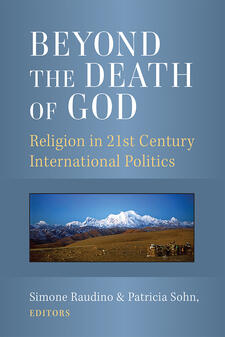
Beyond the Death of God

Torture, Humiliate, Kill

Lawyers Beyond Borders


