2025 Tobin Siebers Prize Announcement
About the Tobin Siebers Prize
Submissions are now open for the 2025 Tobin Siebers Prize for Disability Studies in the Humanities. This year will be the final year that University of Michigan Press offers this prize. For 10 years, the prize has been awarded yearly for the best proposed book-length manuscript on a topic of pressing urgency in the field of Disability Studies (with the exception of 2020, due to the challenges presented by COVID-19). The prize has been awarded in memory of disability studies pioneer Tobin Siebers, Professor of English at the University of Michigan and author of many influential books and articles in the field. Reflecting on the work of the scholar the prize commemorates, the competition has invited submissions on a wide range of topics, from literary and cultural studies, to trans-historical research, to contributions to disability theory such as work in crip/queer studies.
The deadline for submissions is September 1, 2025; the winner will be announced in February 2026. Winners receive a cash prize of $1000 and a book contract from the University of Michigan Press to be published in the Corporealities: Discourses of Disability series.
The goal of establishing the prize was to stimulate the field of disability studies and also ensure that U-M Press maintained its leading edge in this emerging area. After 10 years, we feel that the field is thriving and this list has become not only well established but is informing so many other aspects of our publishing work. As we move to the next decade, we remain extremely committed to the legacy of Tobin Siebers and the field of disability studies, as seen through a humanistic lens. A big thank you to the authors, series editors, and the family of Dr. Siebers, and here’s to an exciting next step together.
Previous Winners:
- 2024 Angela Marie Smith, Affecting Disability
- 2023 Alyson Patsavas, Pain in Relation
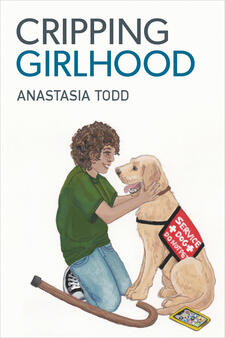
- 2022 Anastasia Todd, Cripping Girlhood
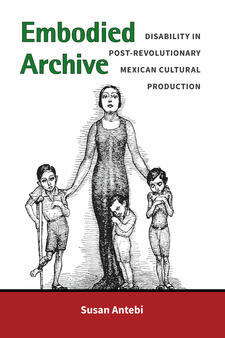
- 2021 Susan Antebi, Embodied Archive: Disability in Post-Revolutionary Mexican Cultural Production
- 2019 Kateřina Kolářová, Rehabilitative Postsocialism: Disability, Sex, and Race in Eastern Europe
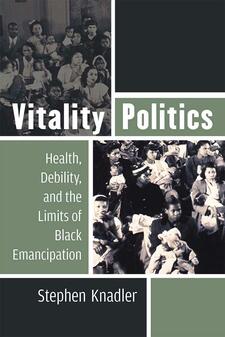
- 2018 Stephen Knadler, Vitality Politics: Health, Debility, and the Limits of Black Emancipation
- 2017 Elizabeth B. Bearden, Monstrous Kinds: Body, Space, and Narrative in Renaissance Representations of Disability
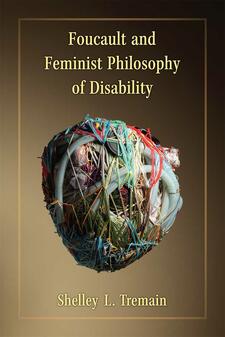
- 2016 Shelley L. Tremain, Foucault and Feminist Philosophy of Disability
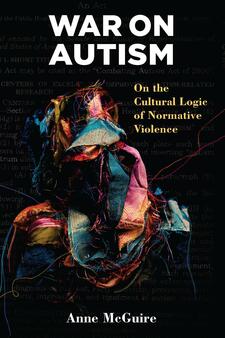
- 2015 Anne McGuire, War on Autism: On the Cultural Logic of Normative Violence
Guidelines for Submissions
Eligible submissions include a book proposal and two sample chapters not under consideration by another publisher. Unrevised dissertations, fiction, poetry, and memoirs will not be considered. Manuscripts and supporting documents should be in digital format and must be sent via email to siebers.prize@umich.edu and Acquiring Editor Haley Winkle haleywin@umich.edu, no later than September 1, 2025.
In addition to the proposal and sample chapters, please send the following materials:
- A cover letter that includes:
- A description of the manuscript
- A brief statement regarding its relative contribution to the field of Disability Studies
- The word count and illustration count
- A current curriculum vitae
For assistance with the submission process, please contact haleywin@umich.edu.
About Tobin Siebers
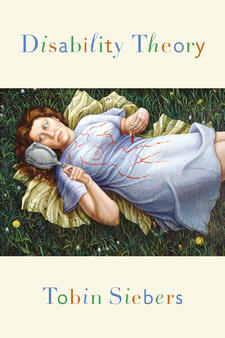
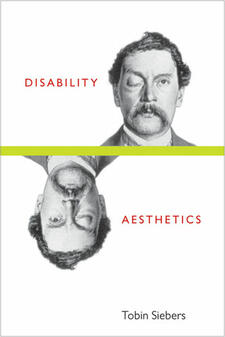
The work of the late University of Michigan faculty member, Tobin Siebers, has influenced Disability Studies in field-shifting ways since the publication of his prize-winning essay “My Withered Limb” in 1998. His subsequent scholarly publications, including the books Disability Theory (2008) and Disability Aesthetics (2010) as well as essays such as “A Sexual Culture for Disabled People” (2012), quickly became pivotal works in the field. Siebers’s work has galvanized new scholarship in relation to questions of representation, subjectivity, and the entry of non-normative bodies into public space, and made the study of disability a central component (alongside gender, race, sexuality, and class) in analyses of the culture wars and identity studies.
To honor this remarkable legacy, the University of Michigan Press and the University of Michigan Department of English Language and Literature established The Tobin Siebers Prize for Disability Studies in the Humanities. Reflecting the scholar’s work the prize commemorates, the competition invites submissions on a wide range of topics, from literary and cultural studies, to trans-historical research, to contributions to disability theory such as work in crip/queer studies.